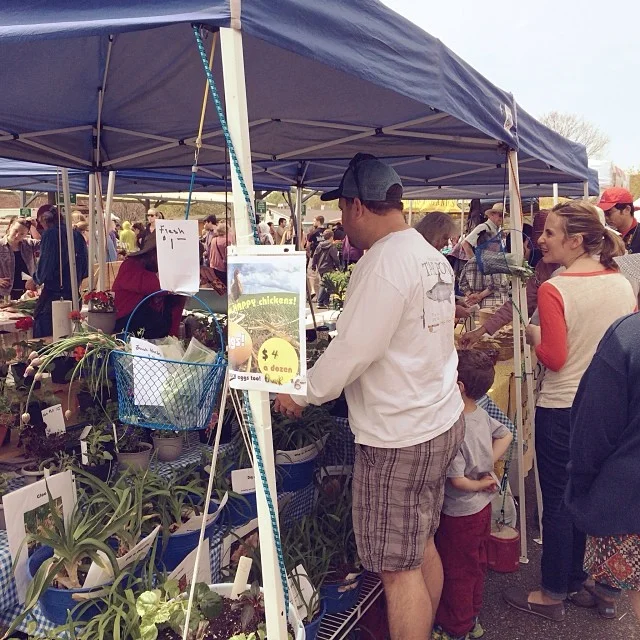
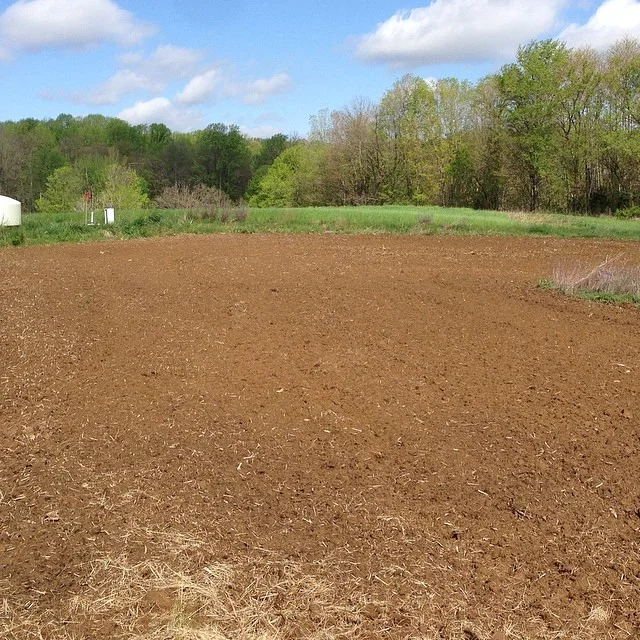
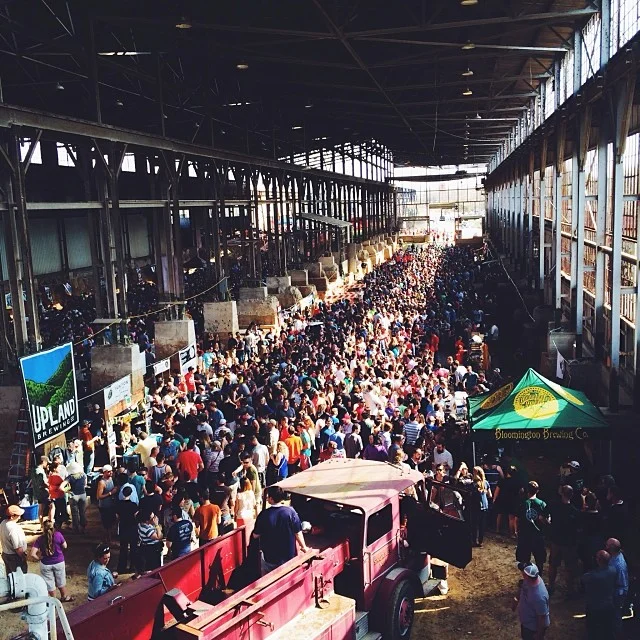
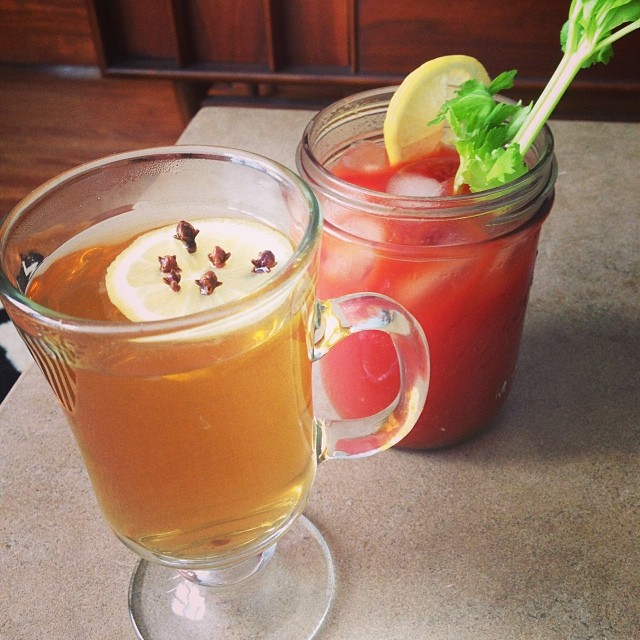
Plotting our plot. #gin
Adam Quirk

via Instagram http://ift.tt/1lWm87v
Use the form on the right to contact us.
You can edit the text in this area, and change where the contact form on the right submits to, by entering edit mode using the modes on the bottom right.
922 South Morton Street
Bloomington, IN, 47403
United States
812-202-6789
Cardinal Spirits is a craft distillery in Bloomington, Indiana that specializes in producing extraordinary spirits from local ingredients.
Photos from our Instagram feed.
via Instagram http://ift.tt/1lWm87v
via Instagram http://ift.tt/1ujw9Sb
via Instagram http://ift.tt/1pPl8s6
via Instagram http://ift.tt/QTKzcf
via Instagram http://ift.tt/1hxj51L
via Instagram http://ift.tt/1iQfLn9
Today we’re excited to announce a partnership project with Indiana University’s Chemistry department. Cardinal Spirits will be working with a chemistry intern to analyze a cross-section of commercially available spirits using GCMS (gas chromatography mass spectrometry).
Our project has several stages:
1. We will examine samples of the highest quality spirits in the world across multiple categories (vodka, gin, rum, whiskey, liqueur) and analyze their compositions. Our goal here is discovering, for example, what quantities and ratios of compounds comprise the taste profiles of the best rye whiskeys. What levels of a certain compound, for instance, makes a certain rye whiskey taste more "spicy" than the next?
2. We will then determine where the compound comes from using existing research. Is it from the yeast during fermentation? Then it should be in the wash we ferment prior to distillation. We would then analyze our wash as it goes into the still. Conceivably we could look at what it takes to get yeast to make the compound in question (specific growth temperatures, trace nutrients in the wort, specific grains or grain mixtures, length of time spent fermenting, %ABV at which one stops the fermentation, specific strain of yeast, etc). It could also be a function of the distillation, so the impact of the distillation temperature or the temperature gradient in the column could be considered. If the compound is coming from the barrel, then we would look at charring procedures (temperature, length of burn, amount of air blown through, fuel for igniting the wood, etc), species of wood for making staves (white oak from different parts of the world), curing procedures for the wood prior to making staves, whether turning/agitating the barrel improves extraction, etc.
3. We also will determine which of the sample spirits contain only compounds that are easily produced from traditional fermentation and distillation, and which of them are using additives. For example, it is common knowledge in the spirits industry that many vodka companies add citric acid and glycerin post-distillation. Do the best tasting vodkas have these additives? How much is added?
1. From the compound analysis we can work backwards towards perfecting our own recipes and processes. From the additive analysis, we can expose some tricks of the trade to the wider craft distilling industry.
2. We plan to publish our findings, and contribute to further building the knowledge base of the science of spirit distillation. The research and literature that came before us has been indispensable in getting us to this point, and we're happy to give back in this small way.
We are very excited to work with the IU Chemistry department, and hope to forge a long-lasting relationship with them in our quest to make Better Spirits Through Science™.
via Instagram http://ift.tt/1sWi8t0
via Instagram http://ift.tt/1jiHNqR
via Instagram http://ift.tt/1lrB1zR
During product development we use alcohol (EtOH) infusions to extract flavors. Over the years we've learned that optimum flavors are extracted from ingredients based on four main variables: time, temperature, ABV, and ratio of ingredient to substrate. We've also found that contrary to some published recipes and common knowledge, higher ABV does not always mean a faster or better extraction.
For instance, coffee is extracted for optimum flavor in a very low 10% ABV solution, in just over 12 hours, at around 60°F, using a 1:10 ratio of medium ground coffee to liquid. That sort of thing just takes trial and error to figure out, and sometimes you can lean on previous work by reading as many recipes as you can find.
Another very visual example of this is cardamom. When you extract cardamom in-pod, you want to use around 40% ABV over the course of 72hrs or so. If you use a higher ABV, like say NGS at 95% ABV, the extraction isn't as complete because a lot of the flavor and color molecules in cardamom are water soluble, not EtOH soluble.
Cardamom extraction after 48hrs in 95% ABV NGS on left - 40% ABV vodka on right
Most melons, fruits, and vegetables with high water content will be similar - the extraction needs more water than alcohol.
Something to keep in mind when you're trying to hone your recipes!
The Cardinal Spirits crew is heading to Denver this afternoon for the first annual ACDA (American Craft Distilling Association) conference.
To send us on our way, we mixed up a batch of The Tree Line, the winner of the 2011 Colorado Cocktail Contest. It’s made from spirits from one of our favorite craft distilleries - Leopold Brothers - who are originally from Michigan but have been distilling in Denver for several years.
We think the combination of fresh cherries and herbal liqueur, bright citrus, and a spicy whiskey is the perfect transitional cocktail for this late Winter, early Spring weekend.
Recipe courtesy Denver.org:
2 Bing cherries
2 oz. Leopold's Small Batch Whiskey
.5 oz Leopold's Three Pins Alpine Herbal Liqueur
.5 oz fresh squeezed lemon juice
.5 oz simple syrup
Muddle cherries, lemon juice and simple syrup; add whiskey and Three Pins; add ice and shake. Serve up. Garnish with round slice of lemon peel (to replicate the Colorado sun). Drink and enjoy!
Our designer Ryan Irvin created a beautiful infographic to visually tell the story of how our Perfect Whiskey Glass works.
We had these printed on 120# matte card stock, and include one with every whiskey glass purchase.
Yesterday, I fired up After Effects for the first time in about a year, and made this simple animated version for our online store.
Oh boy, science!
Infographics are great for condensing a story into an easily understandable visual. But if you want to know the rest of the story (you know, with words) you should read it at the bottom of the whiskey glass product page.
The people who have helped Cardinal Spirits get to this point are so awesome and enjoyable, we’d shout their names from the mountain tops, if we had such things in Indiana. Instead, here on the blog, we’ll introduce you to our architect, insurance broker, general contractor and other partners on our roster, one by one. We're calling the series Helpful Hardworking Humans.
Today, we’d like you to meet Jeff Sullivan, our commercial insurance guy.
A while after we started working with Jeff at Hylant in Bloomington, we came across a website with 126 questions to ask your commercial insurance broker. It was a crushing list of scenarios that you should plan for, and, ticking through it, we felt pretty good that we’d already discussed most of them with Jeff. The last question, though, was one that only we could answer: If our building were in rubble after a fire, would I be comfortable with our insurance agent by our side?
Without hesitation, we thought: Yes. Absolutely.
In fact, during the entire time Jeff was getting us insured, he made sure there was never a time when we were sweating it.
Jeff says the worrying, the stress, all that — that’s his job. That’s on him. Only after we were insured did Jeff let us on to the rejection that came before: 15 carriers said no to us before one said yes. (Thanks, Great American!)
Fifteen no’s! Here’s the deal: A few carriers will insure startups. Some carriers will insure distilleries. Almost none will insure startup distilleries.
But, it was no cause for shame. “I never looked at it as though there was any option to come back with a ‘no’ for Cardinal,” Jeff says. “There was going to be a ‘yes,’ and we were going to find it.”
Let’s back up, because what Jeff just said, it can sound a little like insurance-speak. So, now, imagine Jeff saying it with a giant, genuine smile on his face. We’ve never seen him without that smile. Take whatever preconception you have of an insurance guy and put it aside. Instead, picture someone who is thorough and thoughtful, patient and persistent — that’s Jeff.
Ask Jeff about life outside the office, and it won’t be long before he mentions his two kids. One of his favorite things to do is take his daughter, who is in college, out to lunch. He fondly remembers coaching his son’s Little League team.
He even introduced us to another member of the Cardinal family: our commercial real estate broker Dave Harstad, a fellow Helpful Hardworking Human.
After decades in the insurance business — first as a claims adjustor, then as an agency owner, and now as a commercial broker — the nature of Jeff’s job is to think about doom and gloom, but he does it in the most positive way possible.
“I like protecting people and I really like helping people,” Jeff says.
We always feel a little safer after leaving his office.
Jeff grew up on his mom and dad’s cattle farm in Solsberry, about eight miles west of Bloomington. You have to zoom in pretty good to get this tiny rural town to show up on Google Maps. Bloomington was The Big City.
Jeff came to Indiana University and graduated from the business school. The idea was to go into real estate development, but when Jeff graduated, interest rates had spiked, banks weren’t lending and real estate development just was not happening.
So, he followed a friend’s lead and became a claims adjustor for State Farm in Indianapolis. Jeff eventually started his own agency with American Family, and that’s what brought him back to Bloomington in 1995.
Insurance wasn’t the plan, but Jeff found his niche. He ran his own agency for 17 years, until he was ready for a new challenge. About two years ago, Jeff became a commercial insurance broker for Hylant, a insurance brokerage and risk management firm with offices nationwide.
During his days doing claims work, Jeff regularly helped people put the pieces back together after a catastrophe. The technical aspects of the job — say, measuring the damage in a home after a fire — made him think about the big picture.
“The more experience I had working with people who had serious losses, the more I was able to see that the way a good agent could make a difference was to get the coverage where it needs to be before something bad happens,” Jeff says.
Explosions top the list of bad things that can happen at a distillery. We’ve talked with dozens of distillers about setting up shop, but Jeff was the first person to tell us that in order to get insured, we’d have to commit to install explosion-proof lighting and electrical fixtures, a considerable expense compared to the standard options.
His first inclination is to be helpful, not discouraging, even when it would be easier for him to be the latter.
An example: We’d like to allow volunteers to bottle some of our spirits — a fun way for the community to get involved with Cardinal Spirits and vice versa. Certainly not essential to getting up and running, the idea became unintentionally buried in the business plan, like on page 46, line 18.
But Jeff plucked it out of obscurity — we suspect he’s one of the few who truly read our plan cover to cover — and came up with some ways that we could keep volunteers and our business safe if the idea ever became a reality. Without him, we wouldn’t be thinking that far ahead.
He never wants to get in the way of our business plan. He just wants to make sure we’re covered for everything big and small.
We know this is going to be a long-term relationship, not a fleeting one where we don’t hear from him until it’s time to renew our policy. Jeff still checks in with us regularly by calling and visiting the Cardinal Spirits building, and we call him to share our milestones, too.
When we finally took possession of the Cardinal Spirits building late last year, we admitted to Jeff that we had done some ceremonial demo work with a sledgehammer.
“I just jokingly replied, ‘Make sure you wear your safety goggles.’ Honestly, I said that mostly for fun,” Jeff says. “But, it’s what I do.”
Are you always scanning the room for potential hazards?
I do. I just see stuff: loose handrails, uneven steps, cracked sidewalks and things that somebody is going to hit their head on. I think it’s just the nature of my job.
What mistake do small businesses make when they’re getting insured?
A lot of times, a person thinks that if they call five agents, they have a better chance of getting a good quote. That’s not true. Carriers will only quote for one agent. What the agents get back from the carriers is, “I’m already working on this quote for someone else.” You realize pretty quickly that someone else is ahead of you.
What’s a good piece of advice that you’ve given Cardinal?
One thing that wouldn’t always be done right away is getting the work comp in place. A lot of people will wait until they’re through the renovation process and have started hiring employees. My feeling was that it was in their best interest to get coverage in place because things could go wrong in the renovation process. For example, the contractor could have insurance or they could have an exemption that gets canceled. The next thing you know, they’re doing work without insurance. If somebody gets hurt, that could fall back on Cardinal. Now they have coverage in place.
What’s your perfect day in Bloomington like?
It could easily involve dinner at Feast. Part of it might even be some work around the house, and spending some time walking on trails.
What do you like to drink?
I enjoy this drink (holds up his first Hendrick’s and tonic)! Also, there’s a Two Brothers gluten-free beer that I really like.
Abraham Lincoln didn’t always drink liquor, but when he did, it was probably applejack. Considering he’d be celebrating his 205th birthday today, I’m pretty sure he’d be having one of his favorite cocktails—or maybe even two.
Though Lincoln mainly sipped on coffee and water, and was known as someone who ate to live, not lived to eat — a rare breed of man that needs to be studied further — he ran his own tavern in Springfield, Ill., where he sold a half pint of applejack for 12 cents.
But applejack goes back further than Lincoln.
Laird & Company, the oldest commercial distillery in the United States and only producer of applejack, is a family-run business in Scobeyville, New Jersey that started in 1780. Though the distillery’s most popular applejack today is 80 proof, a blend of 35 percent apple brandy and 65 percent neutral grain spirits aged in a used bourbon barrel for at least four years, Lincoln enjoyed pure apple juice that was fermented and distilled.
And Lincoln wasn’t alone in his applejack lovin’. Before whiskey and rum were introduced in America in the 18th century, applejack was known as America’s favorite drink. It’s even believed that George Washington, the president with whom we’d most likely associate with apples, requested the Laird’s give him their applejack recipe way back in the 1760s.
Washington dined with Moses Laird, the uncle of the Laird who started the distillery, the evening before the Battle on Monmouth, and it’s safe to assume multiple glasses of applejack were enjoyed. But enough with Washington — his birthday’s not for another week and a half.
Today’s Abe’s day.
So in honor of the 16th president’s birthday, we’re giving you a recipe for an applejack cocktail, the Short Story, from Mouton in Columbus, Ohio:
Shake with ice and serve in a cocktail glass with a lemon peel.
And if you’re looking for more ways to pay tribute to Honest Abe, you can make Mary Todd Lincoln’s White Cake using her original recipe, which can be found here. It may not be the weekend, but there’s no reason you can’t celebrate on a Wednesday. So raise your glass to Lincoln, one of America’s greatest presidents, because he sure as hell deserves a toast.
via Instagram http://instagram.com/p/h8trBcjxj9/
via Instagram http://instagram.com/p/hwAVPPDxgb/
via Instagram http://instagram.com/p/hoe2oiDxiX/
via Instagram http://instagram.com/p/hd-KX-jxuu/
The people who have helped Cardinal Spirits get to this point are so awesome and enjoyable, we’d shout their names from the mountain tops, if we had such things in Indiana. Instead, here on the blog, we’ll introduce you to our architect, insurance broker, general contractor and other partners on our roster, one by one. We're calling the series Helpful Hardworking Humans.
Read More