Piña Colada with Tiki Rum
Erica Sagon
Piña Colada
Makes 1 cocktail
2 ounces Cardinal Spirits Tiki Rum
1.5 ounces coconut cream
1.5 ounces pineapple juice
- Combine all ingredients in a shaker with ice.
- Shake, then pour into a tall glass.
Use the form on the right to contact us.
You can edit the text in this area, and change where the contact form on the right submits to, by entering edit mode using the modes on the bottom right.
922 South Morton Street
Bloomington, IN, 47403
United States
812-202-6789
Cardinal Spirits is a craft distillery in Bloomington, Indiana that specializes in producing extraordinary spirits from local ingredients.
The Drop is your source for all things craft.
Makes 1 cocktail
2 ounces Cardinal Spirits Tiki Rum
1.5 ounces coconut cream
1.5 ounces pineapple juice
Summer meals are all the about the grill. While you're at it, why not throw some fruit on there to use in cocktails? The heat intensifies the sweetness and adds that tell-tale summertime char that brings new flavors to classic drinks.
Pineapple is one of the easiest fruits to grill because it stands up to heat well. Long spears rest on the grill with ease, and allow for some sweet burn lines.
1.5 ounces Cardinal Spirits Tiki Rum
2 tablespoons grilled pineapple
Juice from 1/2 of a lime
5 to 7 mint leaves
Seltzer
Drink No. 2 begged for peaches. I used charcoal rather than open fire for this drink. After about 8 minutes of facedown time on the grill, the peach halves were soft and lightly charred.
1.5 ounces Cardinal Spirits White Oak Whiskey
1 slice fire-roasted peach, peeled
1 teaspoon honey
1 fat lemon wedge
5 to 7 mint leaves
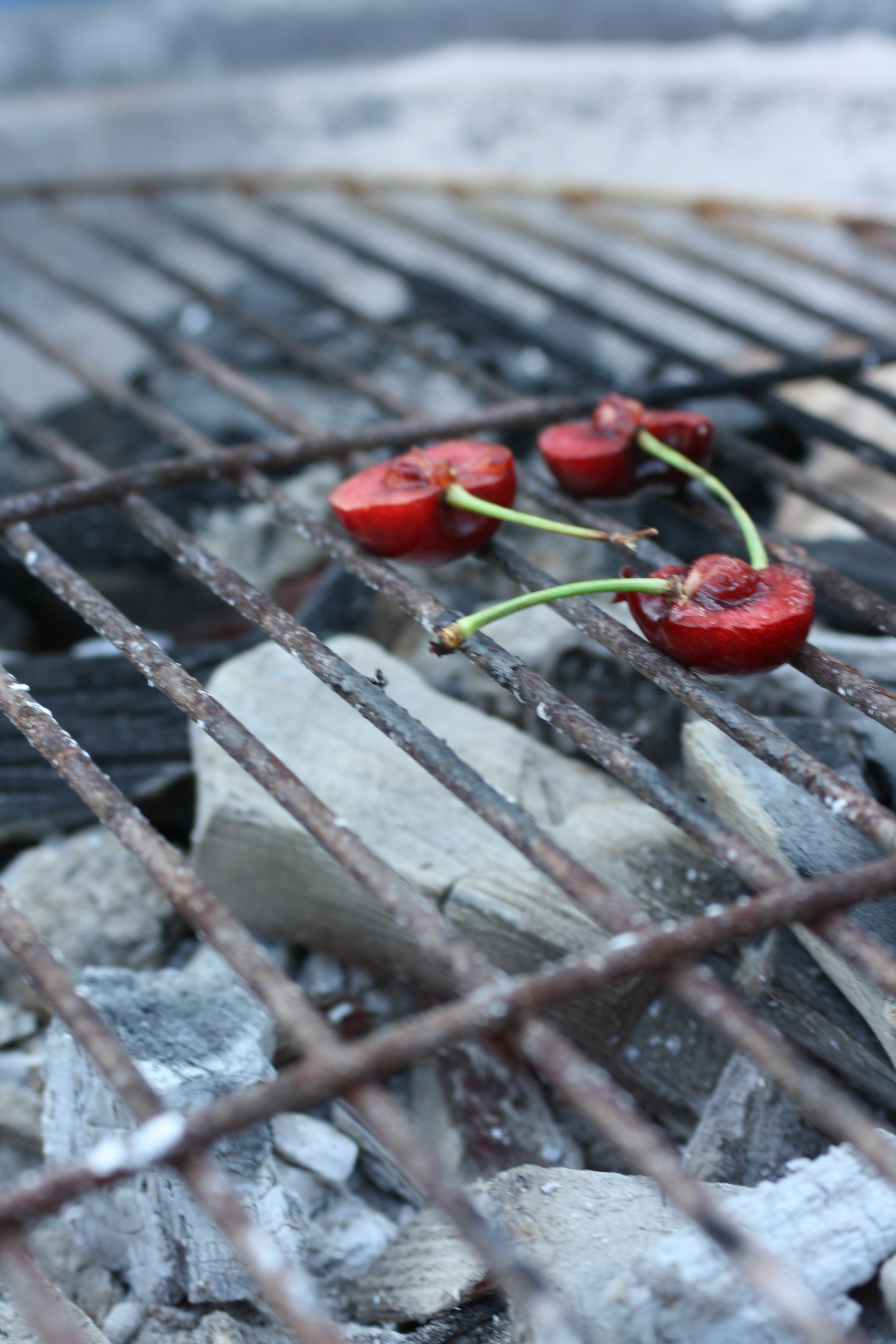
With whiskey so young, this riff on an Old Fashioned is anything but old. First, I hollowed out an orange. With the guts out of the way, it's the perfect vessel for a quick simple syrup. I poured about 1 tablespoon turbinado sugar and 1/4 cup water in the orange shell, and placed it on the grill alongside some halved bing cherries. Once again, I utilized the heat of charcoal for this drink, rather than a fire. After 10 minutes, the orange-infused simple syrup will fizzle and steam to let you know it is ready to go. The cherries need about 30 seconds of heat.
1.5 ounces Cardinal Spirits White Oak Whiskey
2 teaspoons orange-infused simple syrup
2 dashes bitters
1 fire-roasted cherry for garnish
How local is your local beer? What about your local whiskey? Maybe it was produced nearby — but did its ingredients come from near, or far? Probably far. But Sugar Creek Malt Co., a malthouse in Lebanon, Indiana, is starting to change that.
Sugar Creek malts grains that were grown within 200 miles for use in beer and whiskey. Owner Caleb Michalke is reviving a part of the "drink local" movement that has been dead in Indiana since Prohibition.
Cardinal Spirits was Sugar Creek's first distillery customer. Sugar Creek supplies malted barley for our White Oak Whiskey, which is unaged. That malt is cooked, fermented and distilled on-site at the distillery, resulting in one of the most easy-drinking and flavorful unaged whiskeys we've ever tasted.
Let's learn more about Sugar Creek from Caleb:
CARDINAL: What happens at a malthouse, anyway?
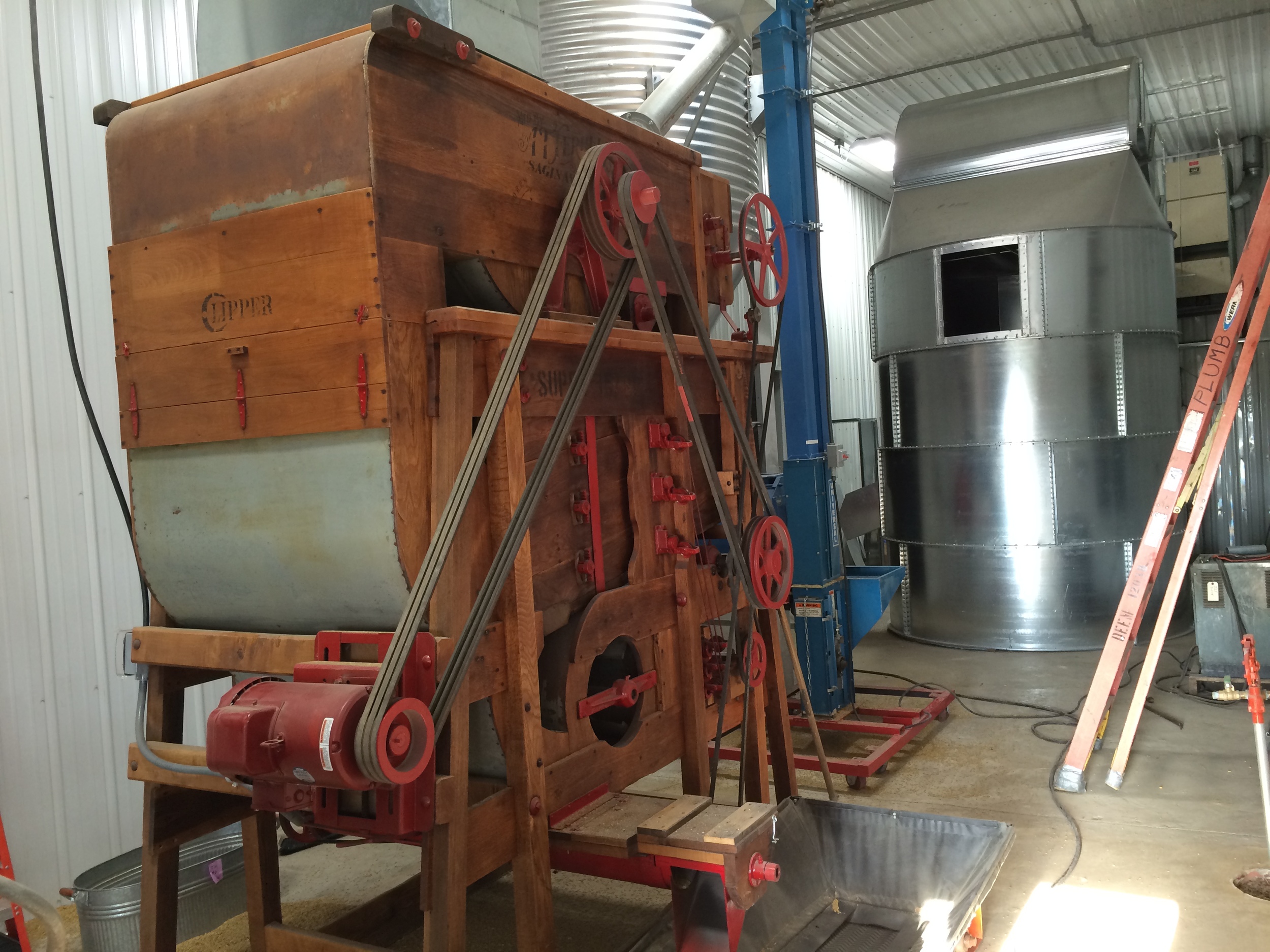
CALEB: We bring in barley, wheat and rye, and whatever grain a brewer or distiller needs. We get it wet, let it germinate, dry it and toast it to get different flavors in the end product. Grain coming straight out of the field is just starch, so we have to germinate it to produce enzymes that break down into sugars.
Where does the grain that you malt come from?
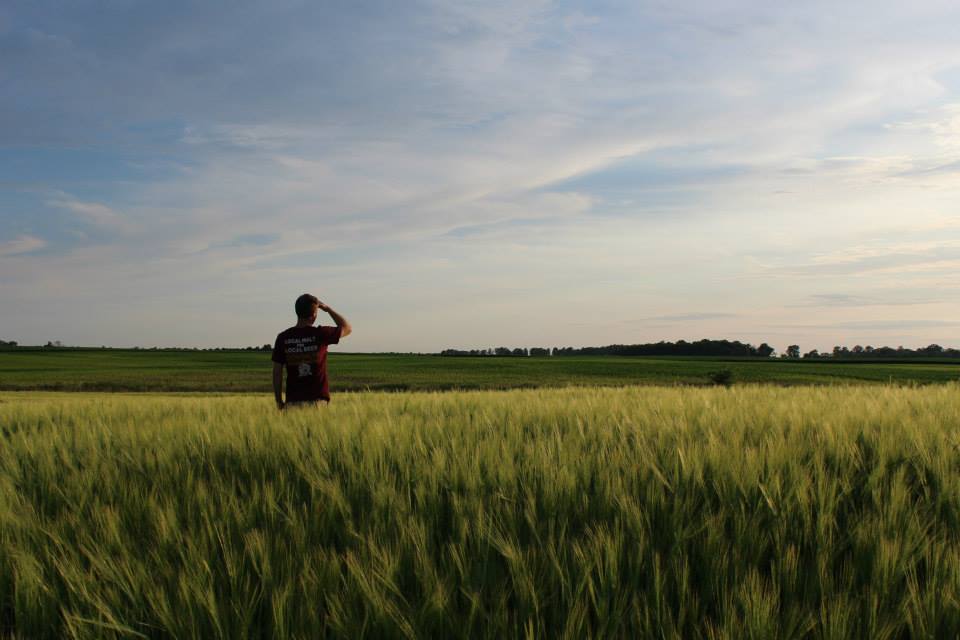
We're trying to keep all the grain this year within a 200-mile radius of the malthouse, which is in Lebanon, Indiana. Then we can really monitor what's going on and know how it's grown, and we're not trucking grain in from Montana or Canada. We've made relationships with a handful of farmers who are wanting to try something different. A lot of the farmers I have growing for me are doing 10 or 20 acres, and some are doing 50 acres.
How did you get into malting?
I grew up on a farm just a mile away from where the malthouse is now. I went to college for agriculture, and wanted to do developmental agriculture, going into third world countries. I tried to do that for a little while, but I really couldn't find a steady income.
I wanted to get into the brewing /distilling industry but didn't want to open a brewery — I wanted to stay on the ag side of it. Nobody was really doing this.
All the barley research and breeding has been done for North Dakota, Montana and Canada so there really hasn't been any barley breeding in Indiana.
Now that we're up and going, we have 11 farmers growing for us and now there's a market for barley to be grown again (in the Midwest).
What's your family's farm like?
It's a hog and grain operation. We've always grown corn and soybeans. We really did not do small grains until last year when we experimented with barley. It's a new venture for everyone.
What's the advantage of malting on a small scale?
If you get a bag of grain from me, I can tell you exactly what farm it came from. When you get it from North Dakota, it's from many farms all mixed in. We're doing 2-ton batches. When I was up in Canada (to take a malting course), we were doing 200-ton batches. We are very small. Just like with craft brewing and distilling, we can play around with different flavors.
What can you tell us about the barley for Cardinal's White Oak Whiskey?
It's a six-row barley — Thoroughbred is the name, bred from a French and US variety. It was grown in Kentucky, then malted here.
Cardinal is going to be getting some rye soon. The rye we have this year was grown on my family farm. It's called Aroostook, and it's an heirloom variety from the New England area with a spicy rye flavor. We're really excited about getting that out into some beer and rye whiskey.
What's next for you?
We're planning on doing a Kickstarter to build a smokehouse. I think that's going to be a really unique feature. We've got all kinds of wood — pear, peach, apple, pecan and lilac — and we're going to do a whole line of custom-smoked batches. At the same time we're building a roasting drum that'll let us do chocolate malt to make porters and stouts.
I'm hoping to get to a million pounds of malt — I'd like to sell that in a year. That'll allow us to supply a lot of breweries with a year-round local beer, instead of just doing a harvest beer.
Mules on mules on mules.
Mondays are a little easier to muddle through when you know that Moscow Mules are $5 on Mondays at C3 bar in Bloomington.
C3 offers three mules on Mondays — two of them with Cardinal Vodka:
1. Georgia mule. Cardinal Vodka and ginger beer, plus a zingy peach puree spiced with cayenne, cinnamon and local honey.
2. Classic mule. Vodka, ginger beer and lime.
3. A new, special mule every Monday with Cardinal Vodka. A spiced pear mule sparked this whole Moscow Mule Monday madness at C3, and since then, there's been new variations weekly with ancho-chile liqueur, Earl Grey tea-infused vodka and more. C3 has also done a farmhouse mule with muddled cherry tomato and basil, and a strawberry mule made with mezcal.
"Moscow Mules are so versatile," says Nick Matio, C3's bar manager. "It's the Mr. Potato Head of cocktails."
And Nick composes them masterfully at C3, an upscale take on a neighborhood bar inside Bloomington's Renwick community. It's a comfortable place to get interesting craft cocktails and tasty small plates — and fun, new mules every Monday.
We see a tall, frosty, tropical cocktail in your future. This weekend, try a classic tiki drink called Pieces of Eight with our new Tiki Rum. Cardinal bartender Chris Resnick shows us how to shake it:
Makes 1 cocktail
2 ounces Cardinal Spirits Tiki Rum
1/2 ounce fresh lemon juice
1/2 ounce fresh lime juice
1/2 ounce passion fruit syrup (1:1 passion fruit juice and simple syrup)
House-made aromatic bitters and a Cardinal Sling cocktail.
At some point, we've all left bitters out of a cocktail recipe, right?
Well, all of us except for Cardinal bar manager Logan Hunter. He wouldn't ever skip bitters, and he doesn't think you should, either.
The case for bitters is simple, he says: they magically perk up and bring balance to a cocktail.
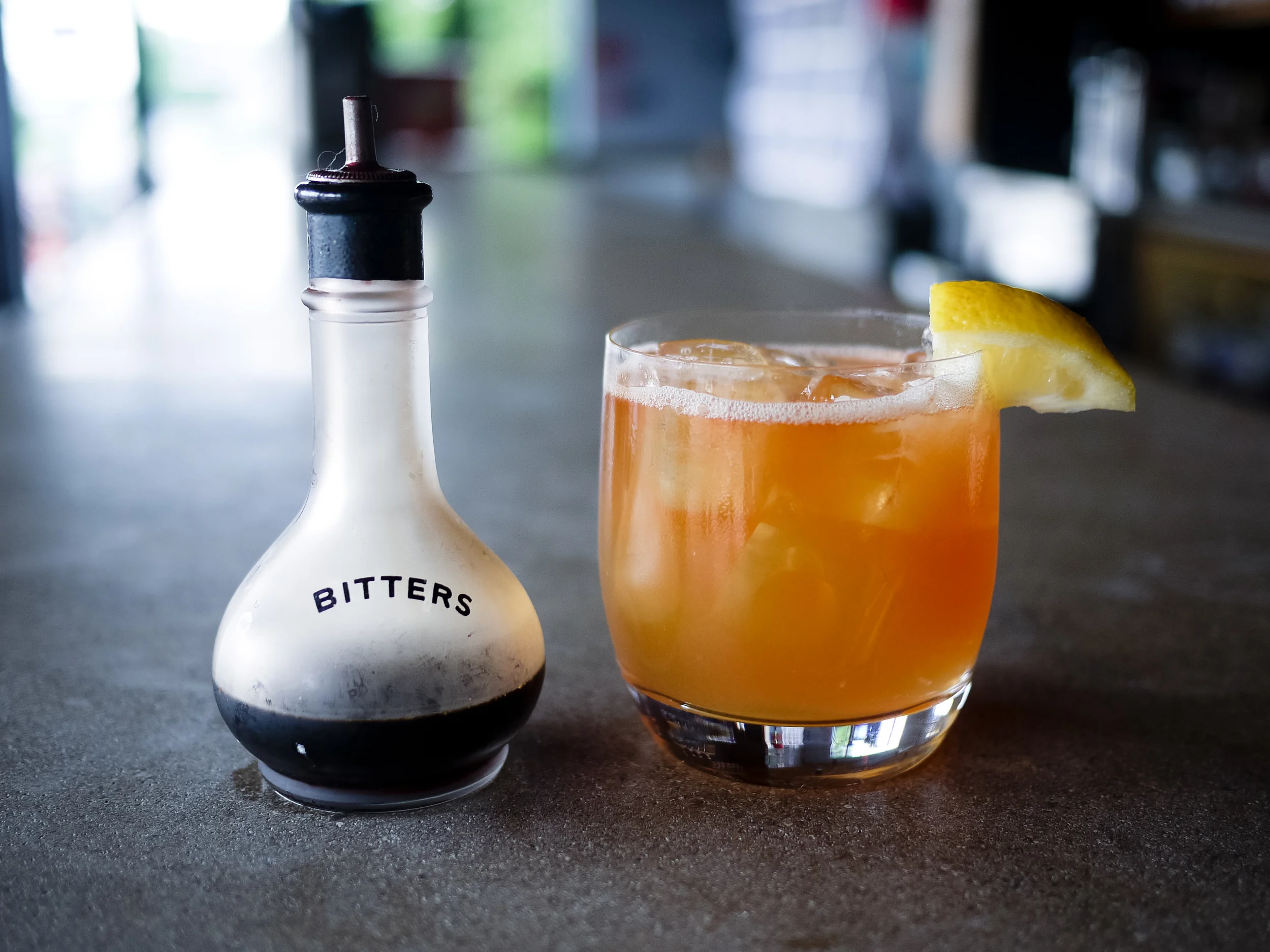
Bitters are high-proof alcohol that is intensely infused with botanicals: herbs, spices, bark and roots. Aromatic bitters — known as a bartender's salt and pepper — are steeped with fall and winter spices and are found in classic cocktails like Sazeracs, Singapore Slings and Manhattans. Because it's usually called for in such small quantities — a dash or two at a time — bitters might seem like a throwaway ingredient. Poor bitters! Do not make them feel sad.
"Bitters are so strong and so concentrated that a few drops can make a big difference," Logan says. "It's packed with so much flavor."
Angostura is the quintessential brand of aromatic bitters, but there are dozens of options out there. At Cardinal, Logan and the rest of the team make a slew of bitters in-house to use in cocktails. Varieties include walnut, lavender, cinnamon, orange and aromatic.
If you're wondering why the drinks you make at home aren't tasting like the ones you get at the bar, bitters might be your answer. A bottle is a home-bar essential. It won't go bad. It doesn't need to be refrigerated. And, if all else fails, you can use it to cure hiccups.
Alright, let's practice with bitters. At Cardinal, we make a cocktail called the Cardinal Sling, which was by far our most popular drink when we first opened. Its delightful sweet and sour balance is achieved with — you guessed it — bitters.
1/2 ounce simple syrup
3/4 ounce fresh lemon juice
1 ounce sweet vermouth
1 dash aromatic bitters
1 1/2 ounces Cardinal Spirits vodka
1 1/2 ounces club soda
Lemon wedge, for garnish
Need a cocktail recipe for tonight? Tomorrow? Right this minute? In the middle of summer, you can't go wrong with a refreshing mojito. Cardinal bartender Baylee Pruitt shows us how to make this classic:
Tales of the Cocktail, a big, boozy trade event for the spirits industry, happened last week in New Orleans, and we definitely did some stalking via Instagram. We were sad to miss it, but these drinks impressed us even from afar:
Fizzy iced coffee is so hot right now.
Over at thekitchn.com, the coffee columnist declares: Coffee and Tonic Water Just May Be Your New Favorite Summer Drink.
(It is.)
Meanwhile, Bon Appétit asks, "What’s cooler than being cool? Ice-cold coffee with a whole lot of tonic water."
(So true.)
Drink writer Kara Newman says "the lines between cocktails and iced coffees are being increasingly blurred this summer."
(Kara would not lie about this stuff.)
Yes, coffee and tonic is this summer's power couple. And we know how to make it even better.
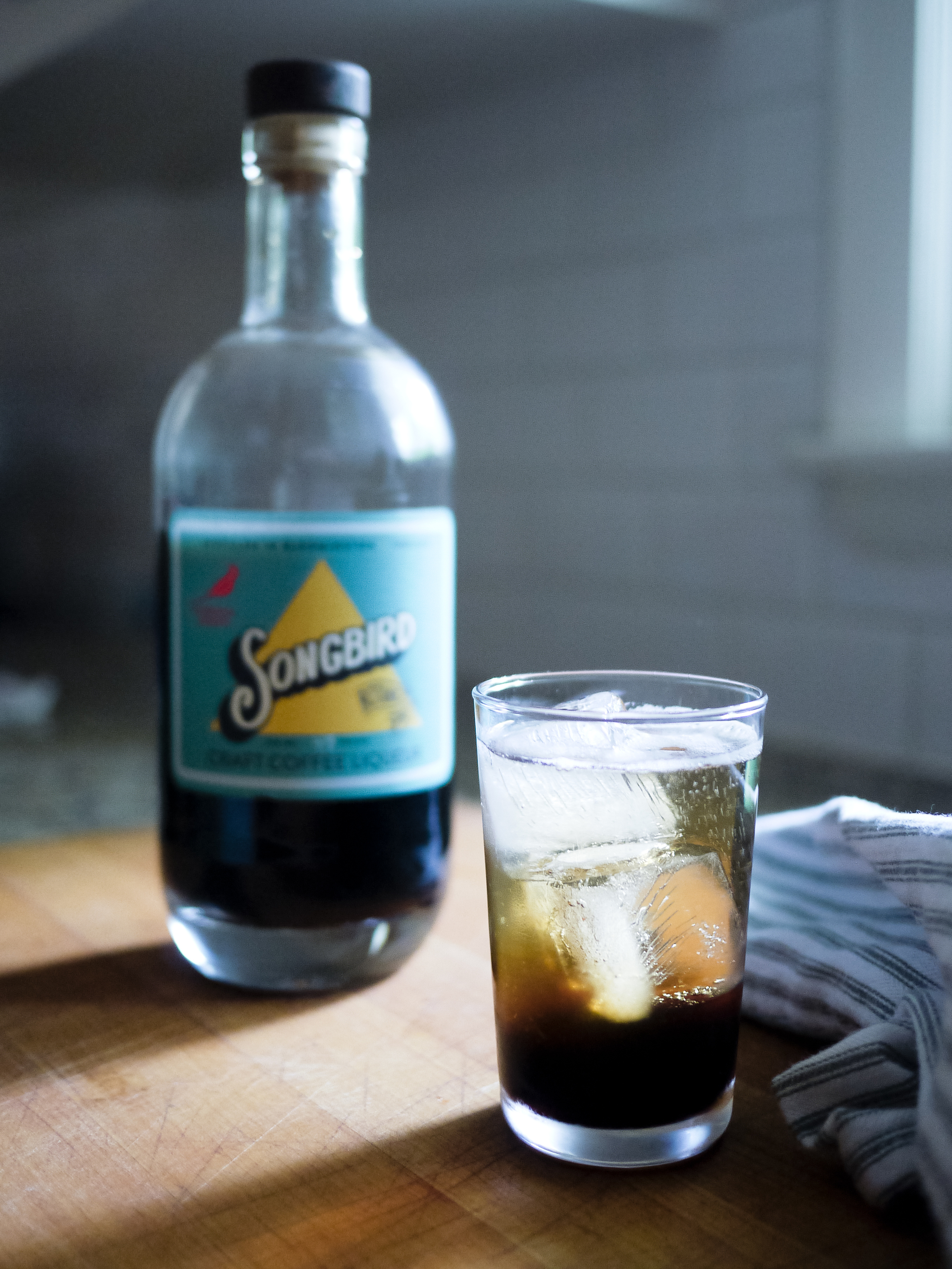
Cardinal Spirits' Songbird Craft Coffee Liqueur plus tonic is a genius two-ingredient cocktail. It has the cool-factor of a Negroni: casual, yet bold and flavorful.
Our Songbird Craft Coffee Liqueur is a total secret weapon on its own — it has a smooth, intense coffee profile, with a hint of sweetness. It makes this whole coffee-and-tonic idea even more appealing, because you don't need to pull an espresso shot or make cold-brew coffee ahead of time. You just add tonic to the liqueur, giving it a refreshing, zippy twist. You could use soda water instead for a more mellow take. This is a masterful impromptu cocktail — the kind of thing you pour when friends pop by.
1-2 ounces Cardinal Spirits' Songbird Craft Coffee Liqueur
Tonic water (or substitute soda water)
Add coffee liqueur and ice to a glass (use 1 ounce liqueur for a small glass; 2 ounces for a larger glass). Top slowly with tonic or soda. Stir gently.
And that's it. It could not be easier. If you're itching for a little garnish, try a sprig of mint, a swath of citrus peel or a stick of cinnamon.
Sun's out, rum's out.
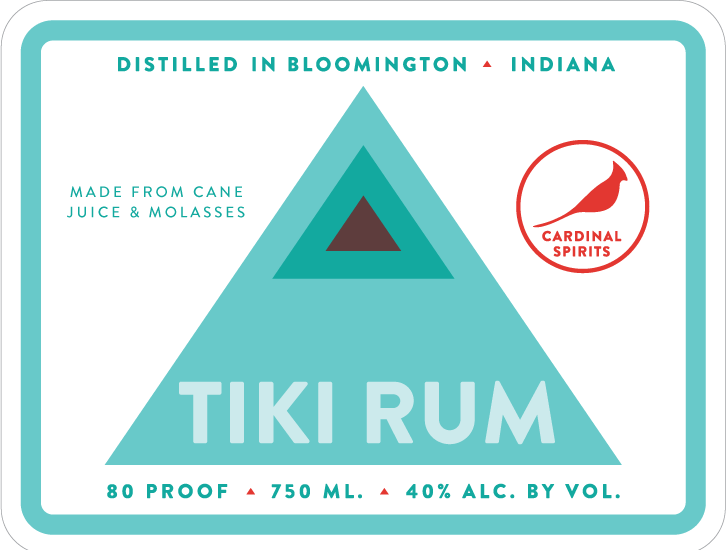
Say hello to Tiki Rum! Our newest spirit will be released on Saturday at Cardinal Spirits — come on by to sip new cocktails and buy a bottle to take home. Got a grass skirt? A sweet tiki shirt? Let's see them on Saturday! Dress the part.
This light rum has beautiful tropical flavors that make it perfect for cocktails, tiki or otherwise. So why did we call it Tiki Rum, if it's good in just about anything? It's an ode to #tikituesday masterminds Chris Resnick and Baylee Pruitt. For months, these two have been making crazy-good tiki drinks on Tuesday nights with Cardinal vodka, gin and whiskey — everything BUT rum.
We got started on rum-making as soon as we could, experimenting with a variety of foundations like cane sugar and molasses, and a handful of yeasts, which is where all the flavor comes from. It took some time, but now, it's here!
One of the first cocktails we'll make with our Tiki Rum is a classic daiquiri. This is not the slushy kind served poolside. Here, Chris shows us how to make the simple yet perfect original version:
Makes 1 cocktail
2 ounces Cardinal Spirits Tiki Rum
3/4 ounce fresh lime juice
1/2 ounce simple syrup
Add all ingredients to a shaker, then add ice. Shake well, then strain into a coupe glass. Garnish with a lime wheel.